

I helped design an interactive city experience that let customers explore UL Solutions safety, sustainability, and security services through locations, markers, and contextual content instead of a traditional service catalog.
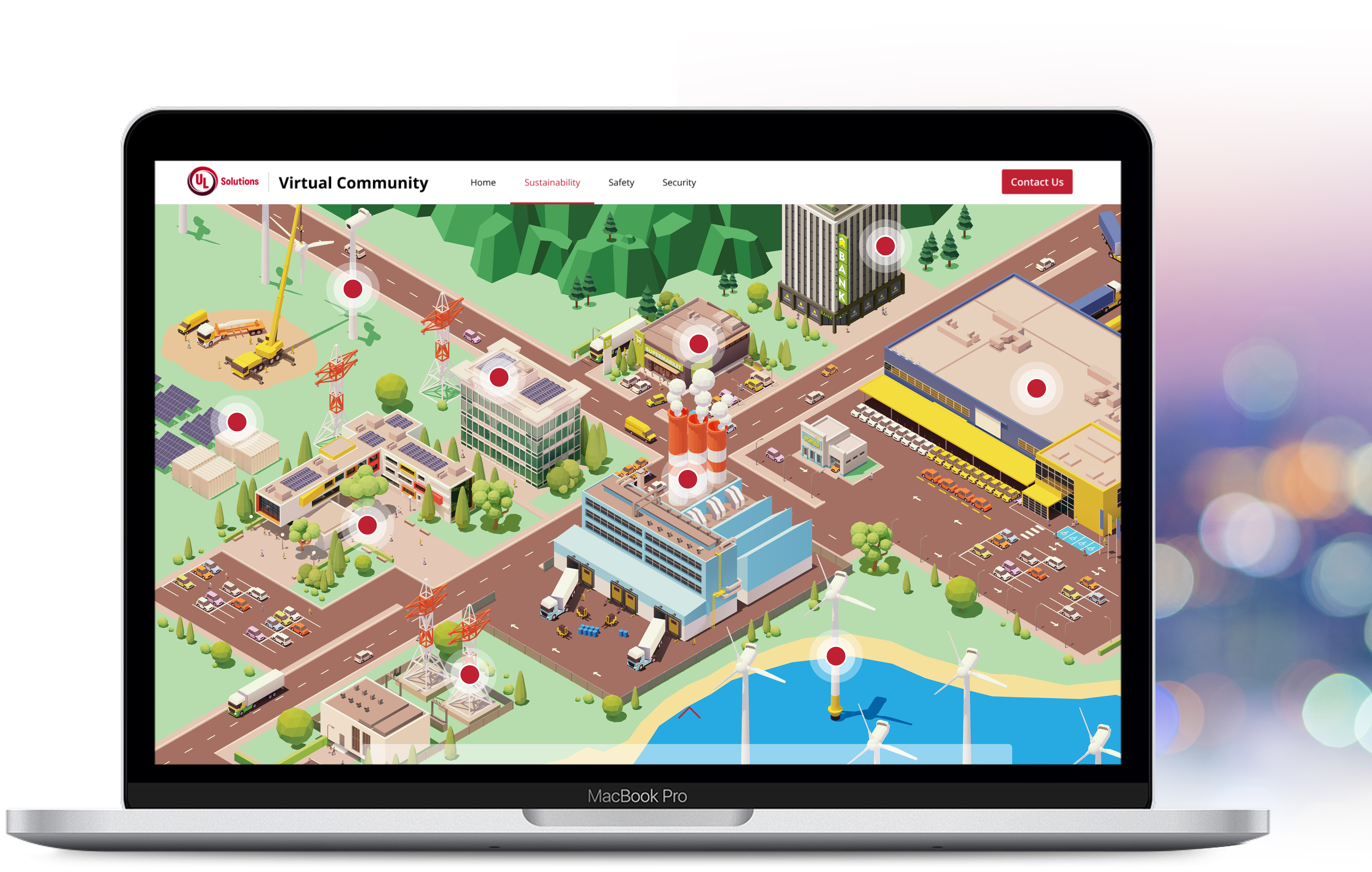
The challenge was making a broad set of safety, sustainability, and security services easier to explore without sending people through another traditional service catalog.
UL Solutions offers services across three very different domains: sustainability, safety, and security, each with its own audience and technical depth. Rather than a conventional site structure, the concept became an interactive isometric city: a single illustrated environment where every building represents a service area, and clicking a location surfaces the relevant offerings for that community.
My role was experience and interaction design. I worked on how the city was organized, how people moved between service areas, and how the content drawers behaved once someone selected a location.
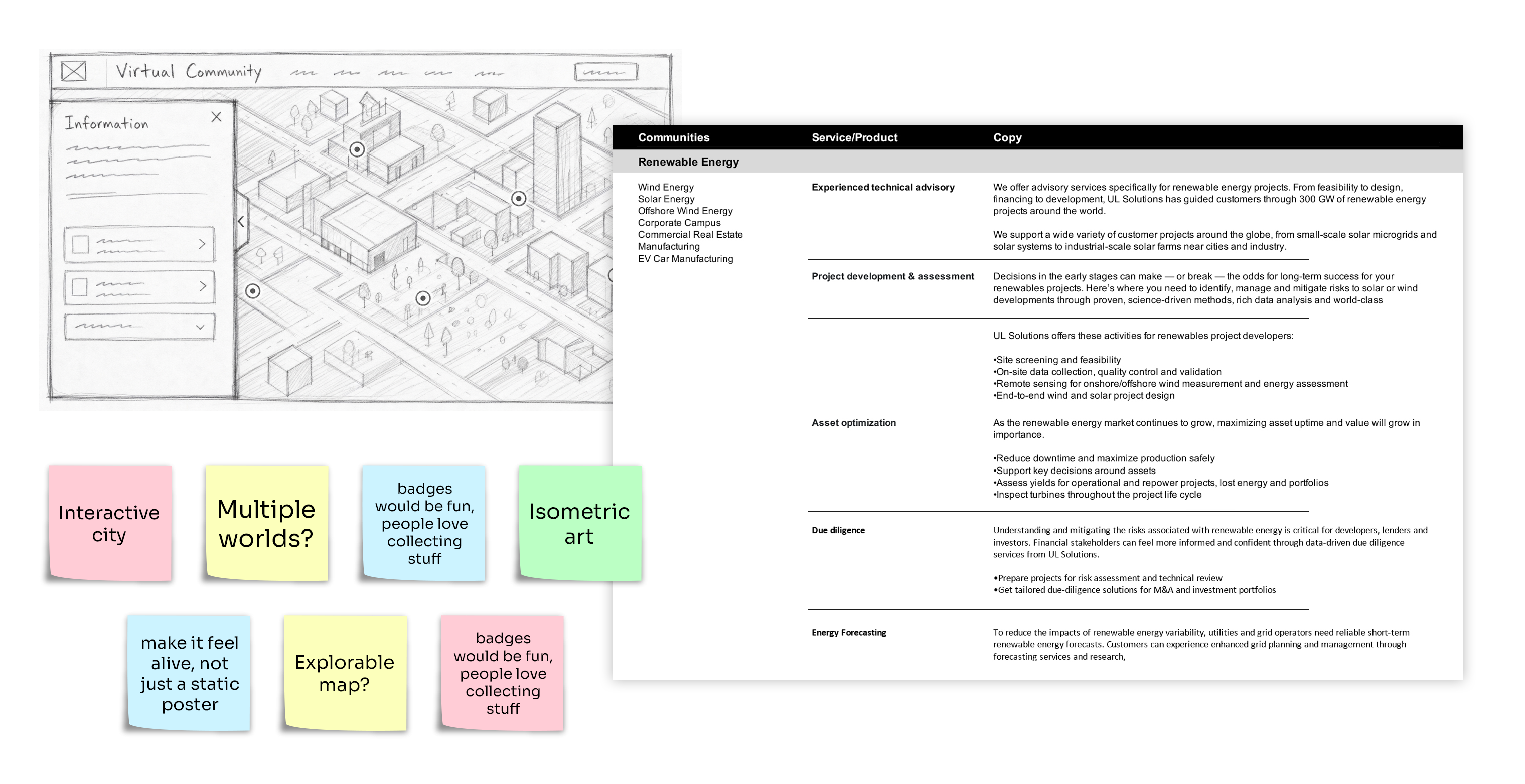
We mapped the content before the illustration was finalized so every location represented a real service area approved by the stakeholders. Selecting a marker opens a drawer with the related offerings and supporting information, which lets visitors keep exploring without leaving the city.
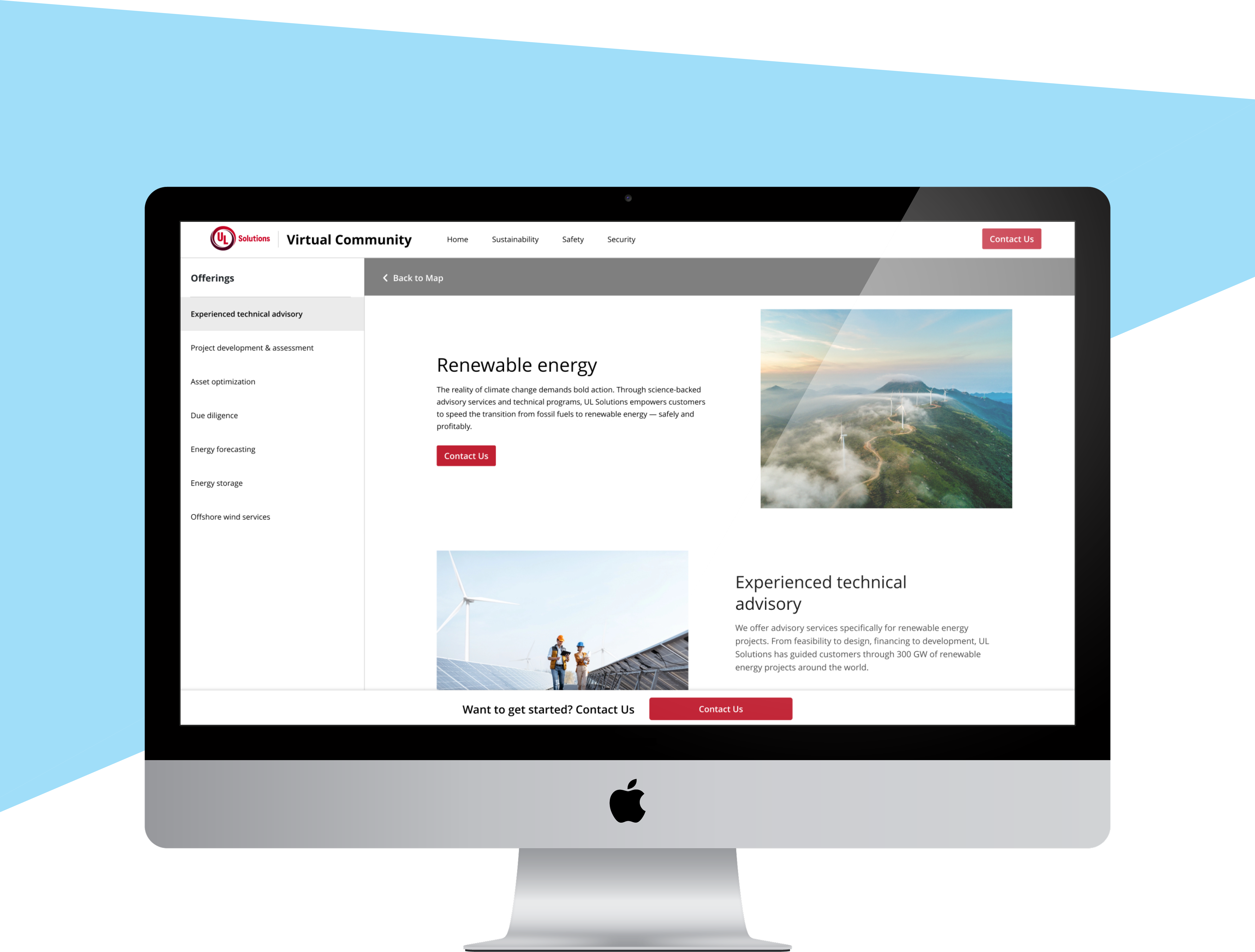
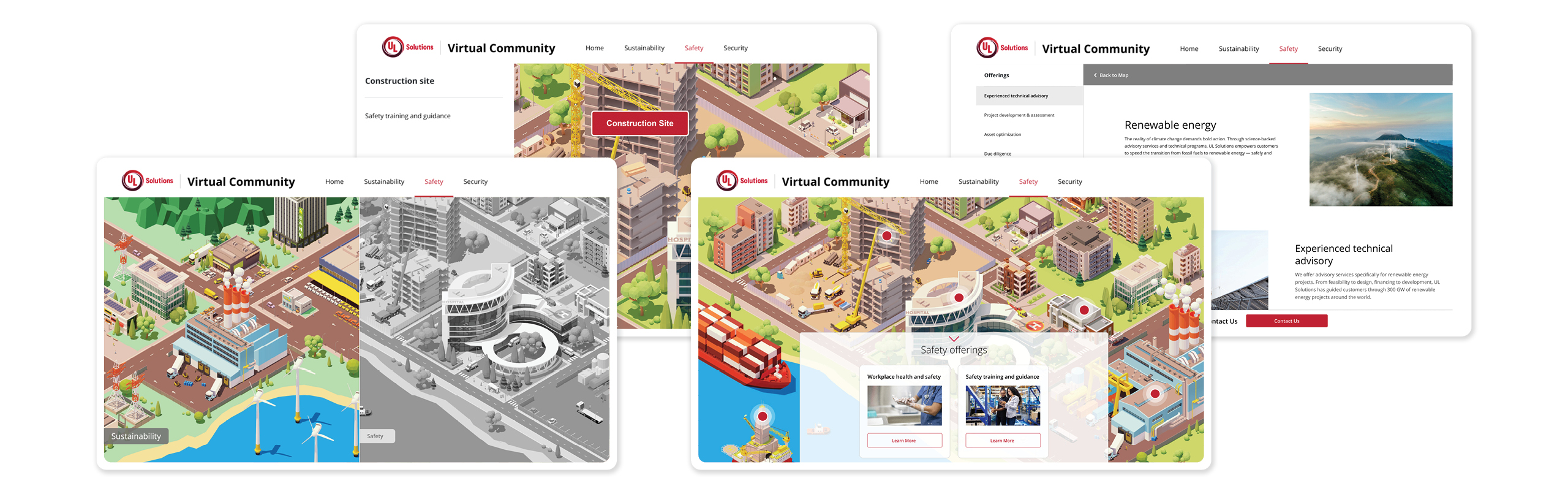
The same interaction pattern carries across every part of the city. A construction site, for example, opens safety training and guidance in the same drawer pattern used for renewable energy. That consistency keeps the experience feeling like one system rather than three separate tools.
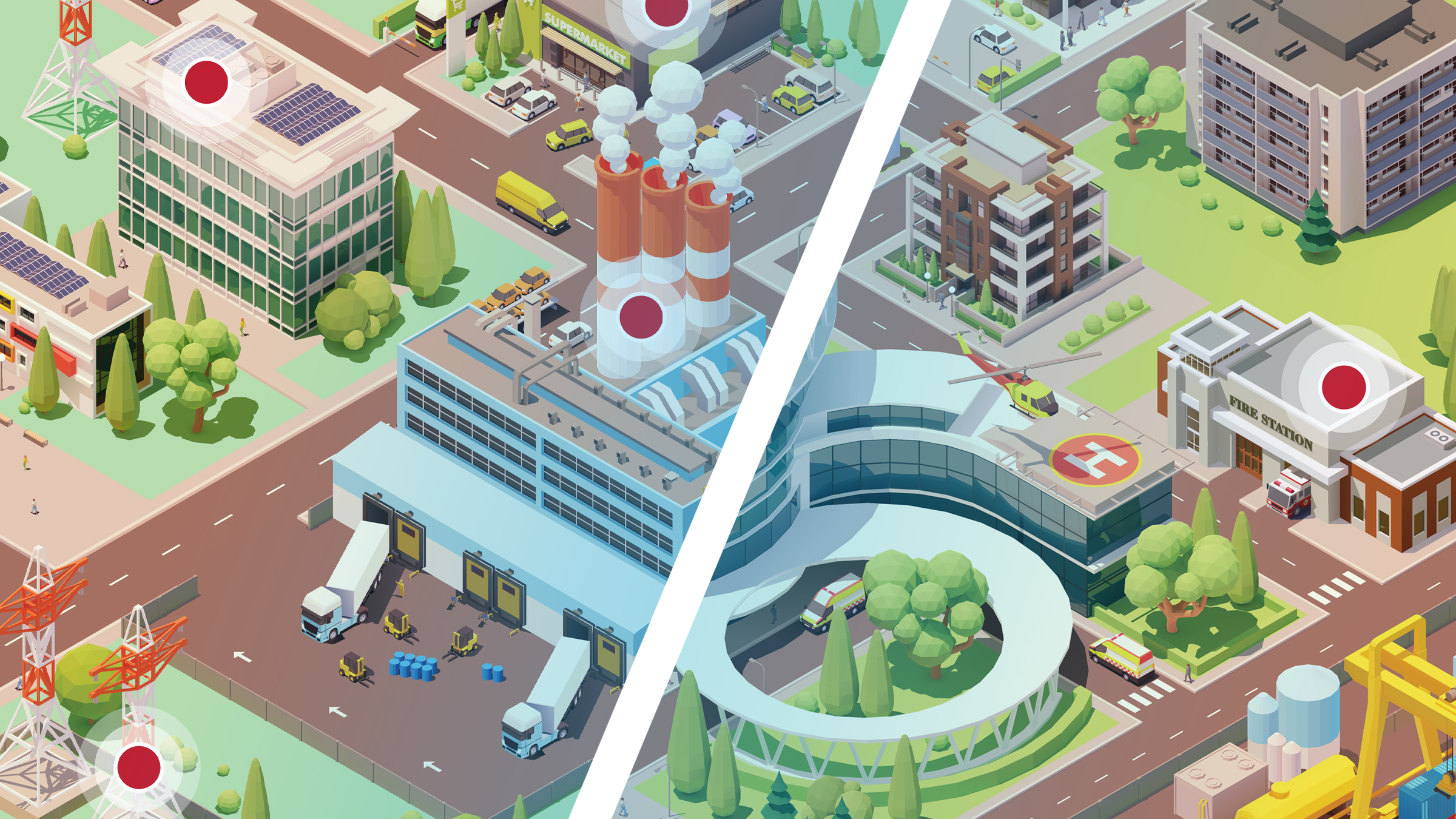
The finished environment spans multiple illustrated scenes to cover the full range of communities, from renewable energy and construction to hospitals and emergency response, each with its own palette, all reading as one consistent system.