
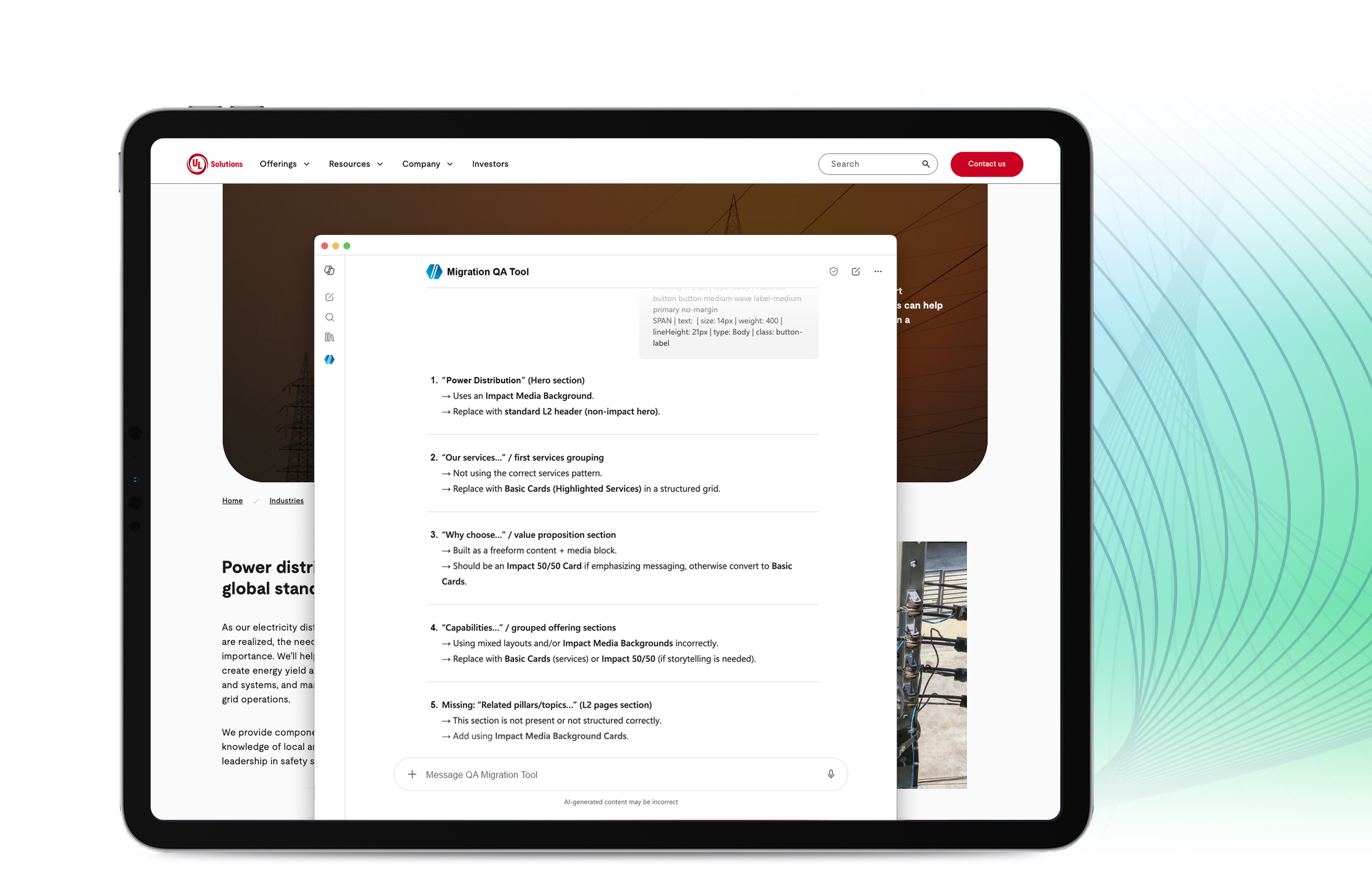
I designed a QA workflow that combines a browser extension, Copilot, and UL Solutions design system guidance to identify common page issues earlier in the website migration process.
The UX team joined the website migration late in phase one, with hundreds of pages still waiting for QA. The content team did not have enough capacity to act on every issue we found, so UX started making fixes directly in the CMS.
With another 1,500 to 2,000 pages expected in later phases, that process was not going to scale. I started exploring whether AI could catch common design system issues earlier, during content creation, so formal QA could focus on the problems that actually needed a person.
Catch it before a human ever has to.
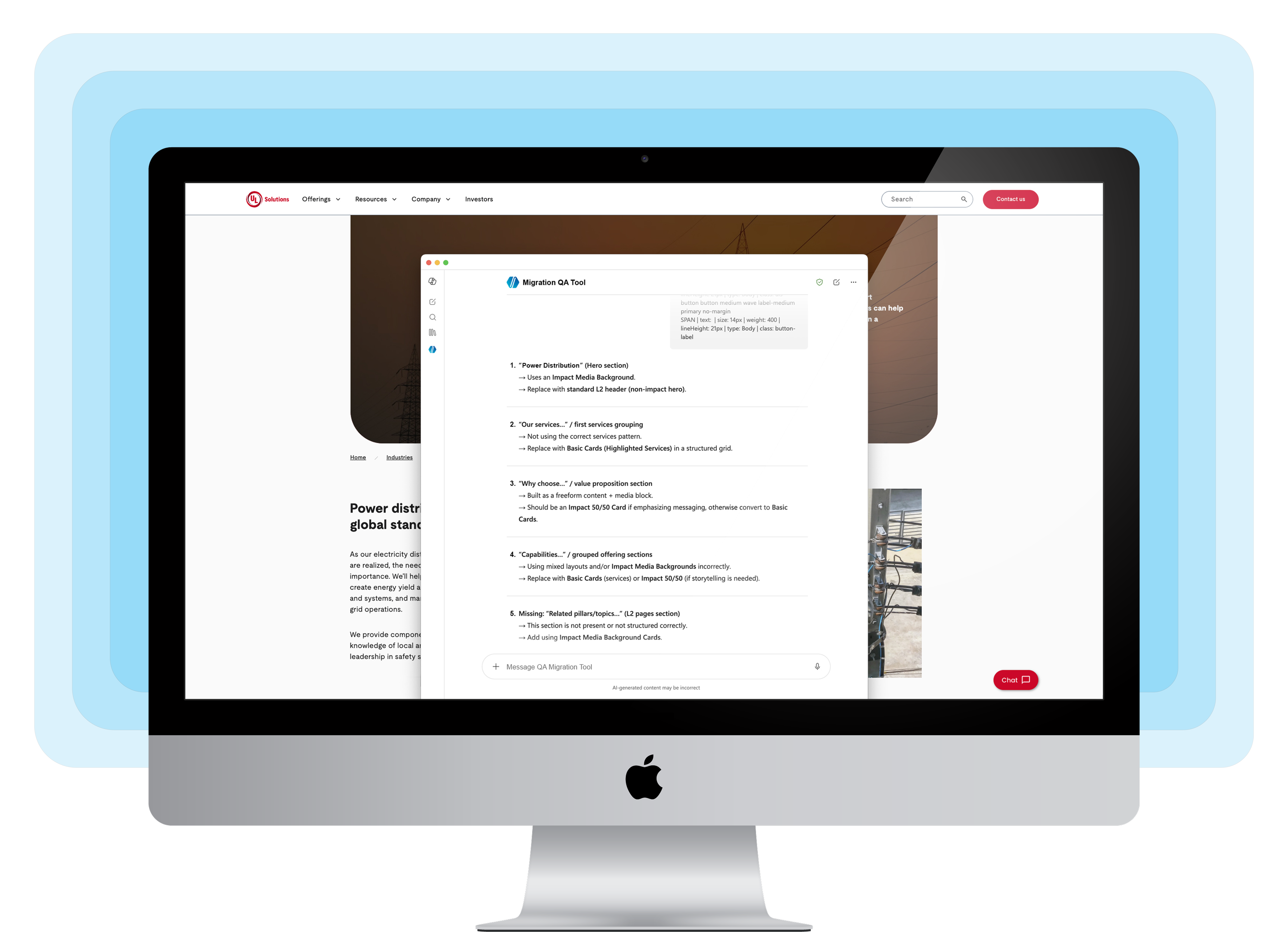
The workflow pairs a Copilot Studio agent with a browser extension that lets an editor run the first check directly from the page they are working on.
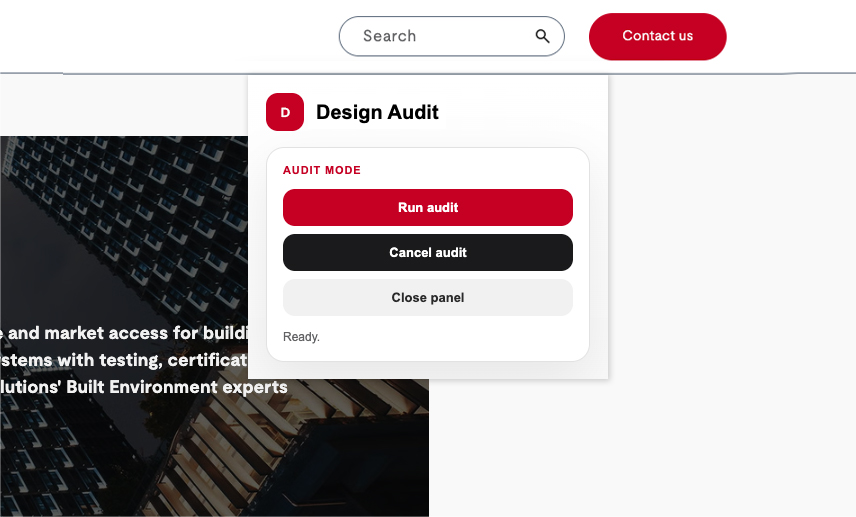
The browser extension runs on the page being edited. The editor can run an audit, copy the results, and send them to the agent without opening another system.
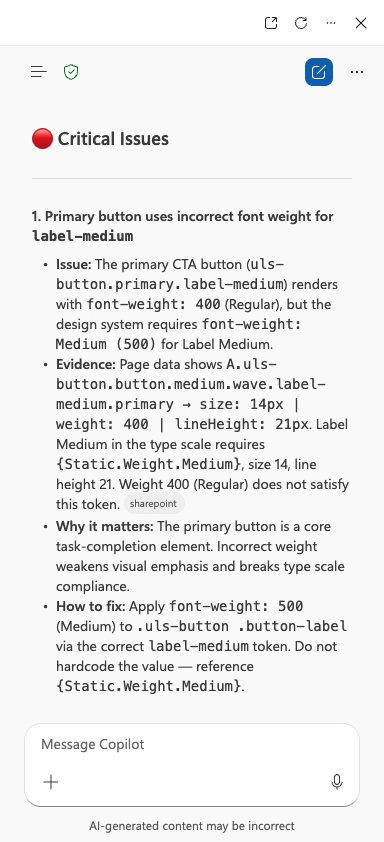
Each issue includes the design system rule being flagged, why it was flagged, and what needs to change. The editor does not have to know the design system well enough to diagnose the issue from scratch.
At the projected page volume, manual QA alone was not realistic. Moving common checks earlier in the workflow could reduce repetitive review and leave the UX team more time for issues that required judgment.